Multi-Factor Authentication (MFA): Your Second Layer of Security
MFA adds a second lock to your digital accounts, keeping them secure even if your password is compromised.
14/10/2026
As of October 1, 2025, the U.S. federal government shutdown has significantly impacted immigration services, with disruptions varying across agencies based on their funding sources. The U.S. Department of Labor (DOL), which plays a central role in processing H-1B visas and employment-based green cards, has halted operations due to a lapse in congressional funding. This means companies cannot file new Labor Condition Applications (LCAs) or PERM certifications, both of which are mandatory steps in sponsoring foreign workers. Immigration lawyers warn that no new H-1B applications, transfers, or status changes can proceed unless the LCA was certified before the shutdown began. Given that over 71% of H-1B recipients are Indian nationals, this freeze disproportionately affects Indian professionals and employers relying on skilled foreign talent.
Meanwhile, other immigration-related agencies are operating with fewer disruptions. The U.S. Citizenship and Immigration Services (USCIS), primarily funded by visa fees, continues to process existing applications, interviews, and naturalization ceremonies. However, minor staff furloughs and ongoing backlogs may slow processing times. The shutdown has also suspended the E-Verify system, used by employers to confirm work authorization, forcing them to complete I-9 forms manually until the system resumes. The Department of State’s consular services and visa operations remain mostly functional due to fee-based funding, although certain posts may limit services to emergencies based on available resources. U.S. Customs and Border Protection (CBP) and Immigration and Customs Enforcement (ICE) continue essential operations, including border security and enforcement, with minimal disruptions due to separate funding streams.
The most acute operational setback lies with the immigration courts under the Executive Office for Immigration Review (EOIR), which are almost entirely dependent on congressional appropriations. As a result, most non-detained immigration hearings have been suspended, potentially delaying tens of thousands of cases and worsening an already record-high backlog of over 3.4 million cases. Detained court proceedings continue, possibly with increased focus during the shutdown. While overall immigration enforcement remains active, the court system’s paralysis could indirectly hinder enforcement, especially through reduced courthouse operations. As the shutdown continues without an announced end date, stakeholders—including employers, legal representatives, and visa applicants—must prepare for delays and monitor agency updates closely, particularly as Congress negotiates FY 2026 funding and broader immigration reforms proposed by the Trump administration.
Explore more on:
shutdown-halts-h-1b-green-card-processing-indian-professionals-hit-hardest
MFA adds a second lock to your digital accounts, keeping them secure even if your password is compromised.
14/10/2026
Strong cybersecurity practices help protect sensitive immigration, business, and personal information in an increasingly digital environment.
29/09/2026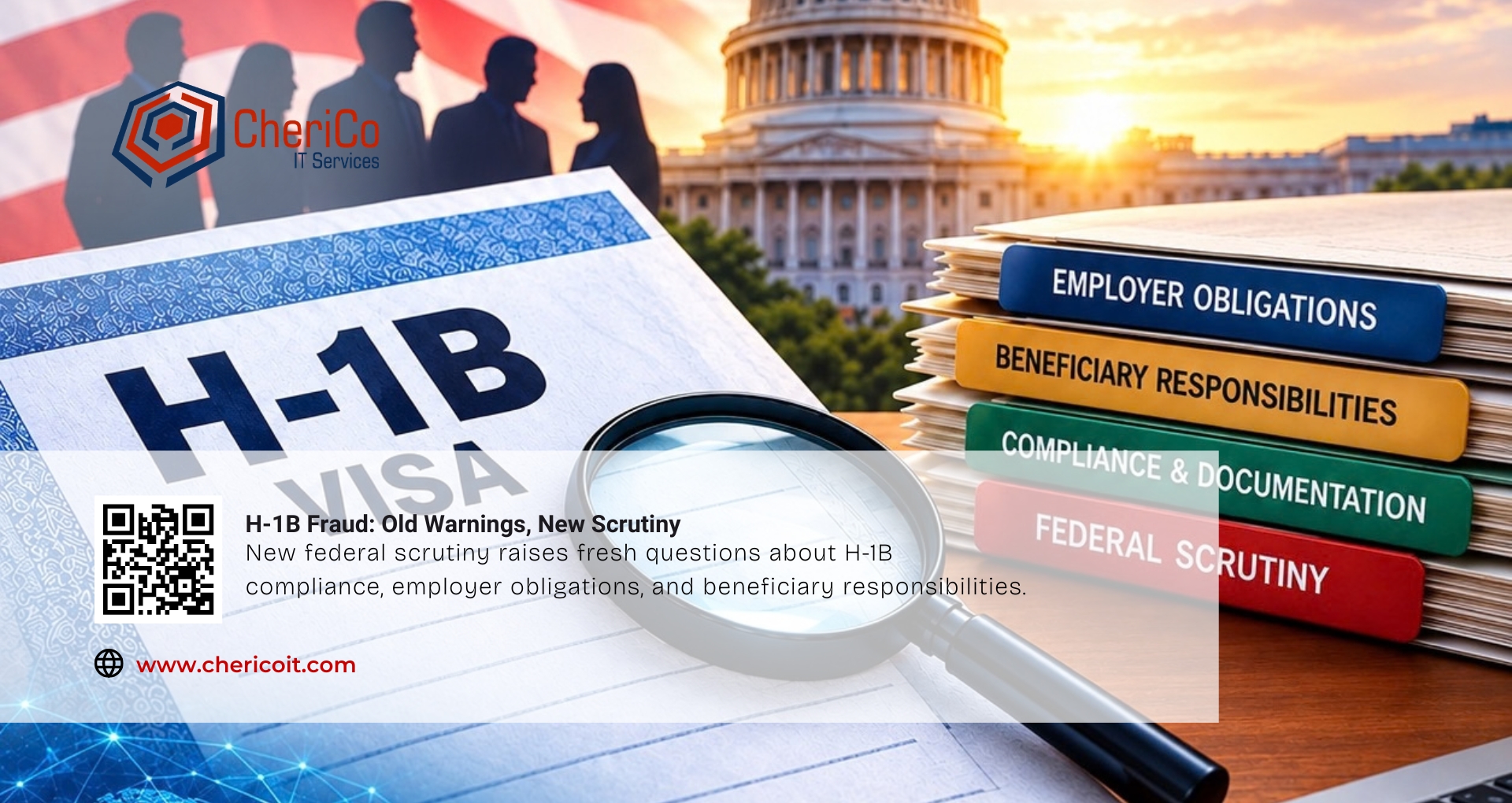
New federal scrutiny raises fresh questions about H-1B compliance, employer obligations, and beneficiary responsibilities.
22/09/2026